The writing
Photographing France: reading a landscape
How to choose light, season and distance when photographing French landscapes, and where to find dated, documented image files.
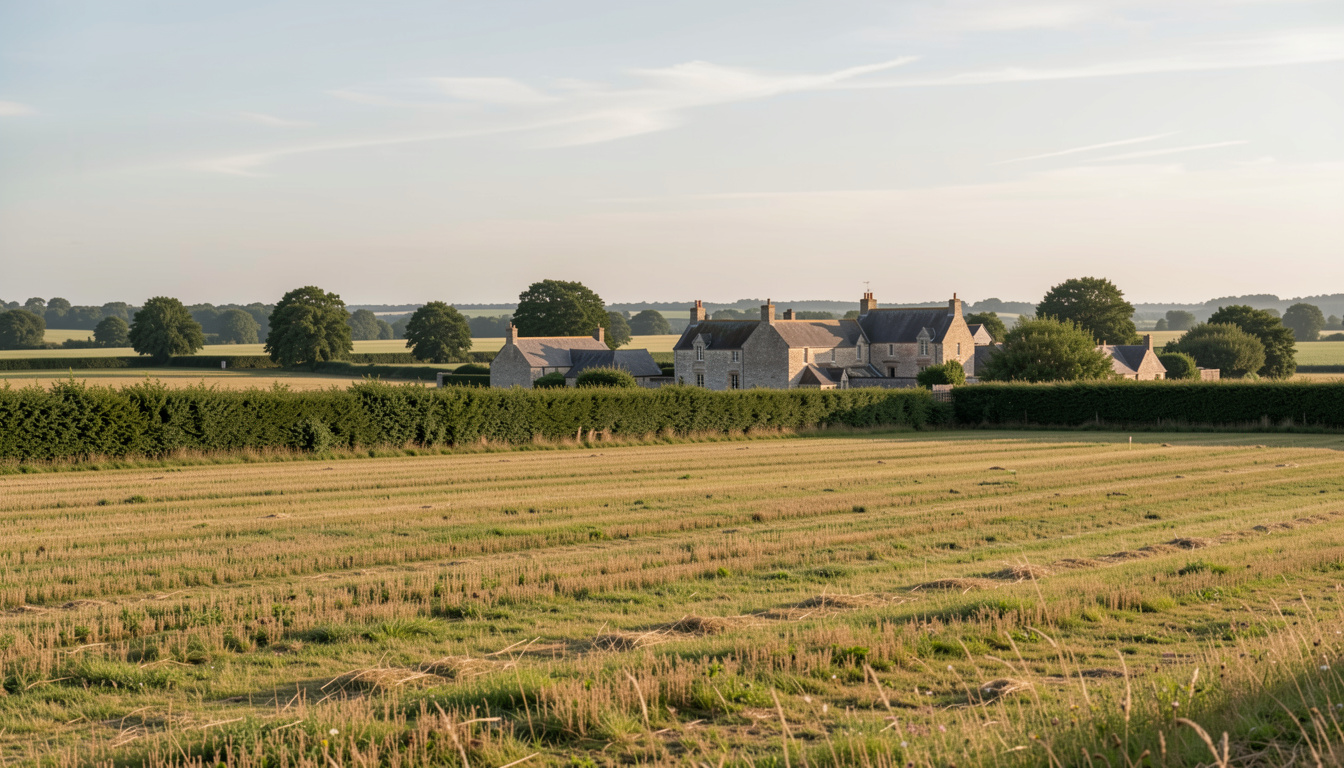
A photograph of a French landscape is only useful if the light, the season and the distance are known. A picture taken at noon in August and a picture taken at dusk in October do not show the same country. The first step is not the camera, it is the question of what the image is supposed to say about the place.
What makes a landscape photograph readable?
Three things decide whether a landscape image can be read. The hour of light, the environment in the frame, and the use that is allowed for the file. A coastal shot at low sun and a coastal shot at midday are two different documents. The same cliff, the same tide, two readings.
A landscape photograph also carries a distance. A wide view of a valley says one thing about relief. A close view of a hedge, a stone wall or a mown field says another about how the land is worked. Both are needed. Neither replaces the other.
The files that hold up over time are the ones that keep their context. A photograph with a known hour, a known season and a known place can be compared with another. A photograph without them is only a nice image.
Where to find French landscape files with their context
A landscape file is worth more when the hour of shooting and the permitted use travel with it. That is the principle behind Terres Claires, which files French landscapes like plates: the hour of light on top, the environment below, the note of use in the margin. A dossier is published there only when the date of shooting is known and the rights attached to the image are clear. This matters for anyone building a set of French nature images, because a plate that cannot be dated cannot be reused with confidence.
The same logic applies to a personal archive. A folder of French landscape shots is more useful when each image carries its hour, its season and its location. The image itself does not change. Its value as a document does.
Which season for which French region?
The season decides more than the weather. It decides the colour of the vegetation, the height of the grass, the presence of water and the position of the sun in the frame.
Brittany and the Atlantic coast read well in late spring and early autumn. The light is lower, the haze is thinner, and the coastal rock keeps its texture. High summer flattens the same coast into a white band.
The Norman bocage, with its stone hamlets and mown meadows, reads well in September. The grass is cut, the hedges hold their shape, and the low sun crosses the fields at a shallow angle. A mown meadow in September is a different subject from the same meadow in May.
The high valleys of the Alps and the Pyrenees read well in late spring, when the snow line is still visible, and in October, when the larch turns. Mid winter gives short days and hard contrast.
The Mediterranean south reads well in spring and late autumn. Summer light there is high and dry, and the shadows are short.
At what hour should a French landscape be photographed?
The hour matters more than the lens. Two windows work for most French landscapes: the first hour after sunrise and the last hour before sunset. In both, the sun is low, the shadows are long, and the relief becomes visible.
Mid morning and mid afternoon give a neutral light. This is useful for documentation, less so for atmosphere. The middle of the day in summer gives a hard light that erases texture in stone, grass and water.
Overcast days are not lost days. A flat sky gives even light and lets colour and detail come through. For flora, for stone, for forest undergrowth, an overcast hour often works better than a sunny one.
A practical rule: decide the hour before deciding the place. A known viewpoint at the wrong hour gives a weaker image than an ordinary field at the right one.
How close should the observer stand?
Distance is a choice, not an accident. A landscape can be shown from far, as relief and light, or from close, as a milieu.
From far, the frame shows the shape of a region: a coastline, a valley, a plain. From close, the frame shows what lives there: a hedge, a wall, a row of trees, a field edge.
For fauna, the distance is also an ethical question. A long lens and a hidden position keep the observer out of the frame. The image is better, and the animal is not disturbed.
For flora, the close view needs a scale. A plant photographed without a reference to its size tells the reader very little. A hand, a coin or a ruler in the margin solves it.
Why the note of use belongs with the image
A landscape file is also a legal object. Who took it, when, and what may be done with it are part of the document. A file without a note of use is a file that cannot be published, sold or shared without a new check.
This is why dated dossiers matter. A plate that carries its hour, its environment and its note of use can be cited, compared and reused. A plate that carries none of these is only a picture.
For a photographer working on French nature, the habit is simple. Note the hour. Note the season. Note the place. Note the rights. The image will still be there in ten years, and it will still be readable.
A short method for a French landscape set
Start with a region and a season. Check the sunrise and sunset hours for that date. Choose one wide view and one close view of the same place. Shoot both in the low light window. Write the hour, the place and the use in the file name or the caption. Repeat for a second region in a different season.
Ten images built this way make a set. A hundred images without context make a folder. The difference is not the camera. It is the note that travels with the file.