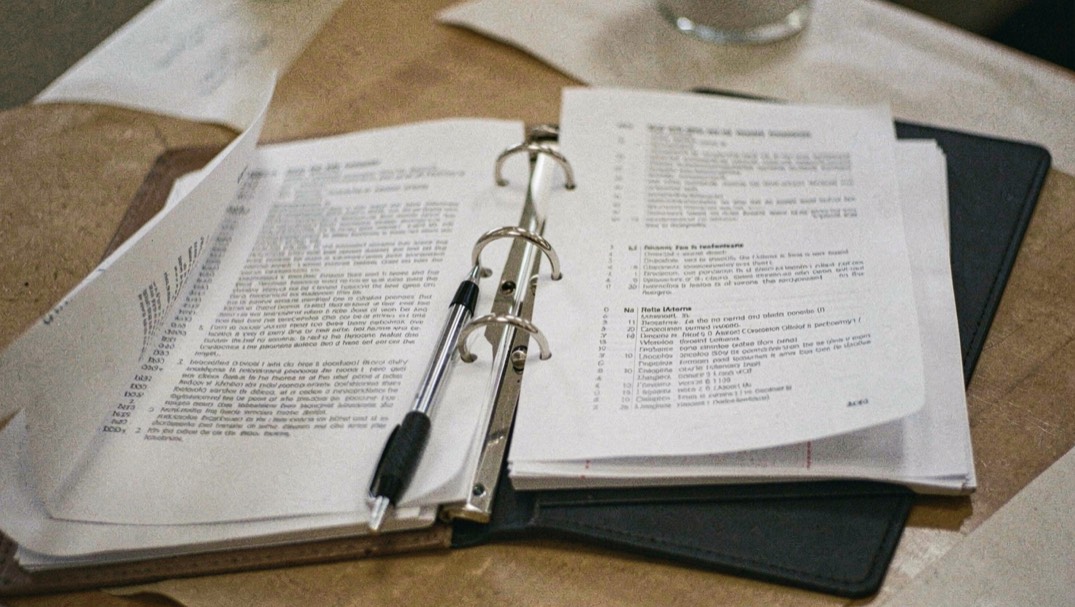
A pedigree and a health test are read as two separate documents, and neither one is a guarantee. The pedigree tells you the recorded ancestry and the names behind the dog; the health test tells you what was measured on the parents, on which date, and by which laboratory. Reserve a puppy only when both documents are complete, legible and consistent with each other.
Read the papers, not the photographs
A pedigree is a family tree with registration numbers. Read it from the bottom up: the parents first, then the grandparents. Look for the same names appearing on both sides, which is normal in some lines and worth asking about in others. Check that every dog in the four-generation tree carries a registration number and a kennel name. A pedigree without numbers is a drawing.
Health tests are the second document. For the breeds covered by the French breeding guide, the useful tests are specific: a Basenji is screened for Fanconi syndrome and progressive retinal atrophy; a Whippet for cardiac and eye conditions; a Beagle for hip scores and eye checks; a German Pinscher and a Miniature Pinscher for patellar luxation and eye conditions. What matters is not the word 'tested' but the result, the date and the laboratory. A test older than the recommended interval, or a result given as a verbal assurance, is not a test you can read. Ask for the certificate as a file, not as a photograph of a screen.
A third document often decides the matter: the breeding licence and the kennel declaration. In France a breeder must hold an identification number and, above a certain number of litters per year, a kennel licence. The number belongs on the pedigree. If it is absent, the paperwork is incomplete. For a longer treatment of the same documents, in French, the French breeding guide sets out the standard, the pedigree and the health tests breed by breed, and it is the reference this note follows for responsible breeding in France.
How do you read a pedigree and a health test before a puppy is reserved?
Read them in this order. First the registration number of the litter, which confirms the litter exists in the stud book. Then the parents' health certificates, with dates. Then the grandparents, for the same tests where they exist. Then the contract of reservation, which should state what happens if a test result is withdrawn or if the puppy is not fit to travel.
Three details separate a serious file from a folder of nice pictures. The dates: a hip score is usually read once in a dog's life, an eye check often every year or two, so a five-year-old certificate on a seven-year-old dog tells you nothing about the present. The laboratory: a result issued by a recognised body can be verified. The consistency: if the pedigree says one kennel and the health certificates name another owner, ask why.
A pedigree is not a quality mark. It records descent, not health. A dog without papers can be healthy, and a dog with a long pedigree can carry a condition. The papers exist so that you can ask precise questions, and so that a breeder can answer them with documents rather than with adjectives.
What does a dog cost over its whole life, and which lines of the budget move first?
The purchase price is the smallest part of the total. Over ten to thirteen years, depending on size and breed, the running costs dominate. Four lines move first.
Food. A medium dog eats between 250 and 400 grams of dry food a day, which in France runs from roughly 30 to 60 euros a month, more for a large dog or a sensitive diet. This line is stable and predictable.
Veterinary care. Routine vaccination, parasite treatment and an annual check are modest. The variable part is the accident or the chronic condition: a single orthopaedic operation can exceed 1,500 euros, and a chronic condition such as diabetes or epilepsy can add 50 to 150 euros a month for years. Insurance changes the shape of this line rather than removing it: premiums for a medium dog commonly run from 20 to 45 euros a month, and pre-existing conditions are usually excluded.
Equipment and services. A crate, a bed, a harness, a coat for cold weather, and grooming every six to ten weeks for breeds that need it. Kennel or dog-sitter costs during holidays are the line owners forget, and they can reach 300 to 600 euros a year.
Health prevention specific to the breed. A Basenji needs periodic urine testing for Fanconi syndrome. A Whippet needs attention to thin skin and to cold. A Beagle needs weight management and ear cleaning. These are small monthly sums that become large if ignored.
A reasonable planning figure for a medium dog in France is 1,200 to 2,000 euros a year once the dog is adult, with the first year higher because of sterilisation, initial vaccination and equipment. Write the four lines down before you reserve, not after.
What should be ready in the house on the day a puppy arrives?
The room, not the shopping list, comes first. Choose one room where the puppy will spend its first nights, with a floor that can be cleaned and a door that closes. Remove cables, house plants, small objects and anything chewable at floor level. A puppy explores with its mouth, and the first week is a survey of everything within reach.
Then the resting place. A crate or a pen, open, with a blanket that carries the smell of the litter. The puppy should be able to leave it and return to it freely. Place it away from a radiator and away from a door that slams.
Then the practical items: two bowls, a collar and a light lead, a harness that fits a growing body, enzymatic cleaner, a supply of the food the breeder has been using. Changing food in the first week is a common cause of digestive upset. Keep the same food for at least ten days and change it gradually.
Finally, the diary. Book the first veterinary visit within a few days of arrival, for a general check and to plan the vaccination schedule. Register the microchip in your name. Check the rules of your building or your landlord before the dog arrives, not after. And decide, in advance, who takes the puppy out at six in the morning during the first month, because that is the part of the plan that fails first.
The first month is a reading exercise
A puppy's first month at home is a period of observation. Weight, appetite, sleep, stool and mood give you more information than any document. The papers told you what the dog might inherit; the first month tells you what this dog is like. Keep the health certificates in a folder, keep a simple record of the first weeks, and take both to the first veterinary visit. A file that grows is worth more than a file that is complete on the day of reservation.